

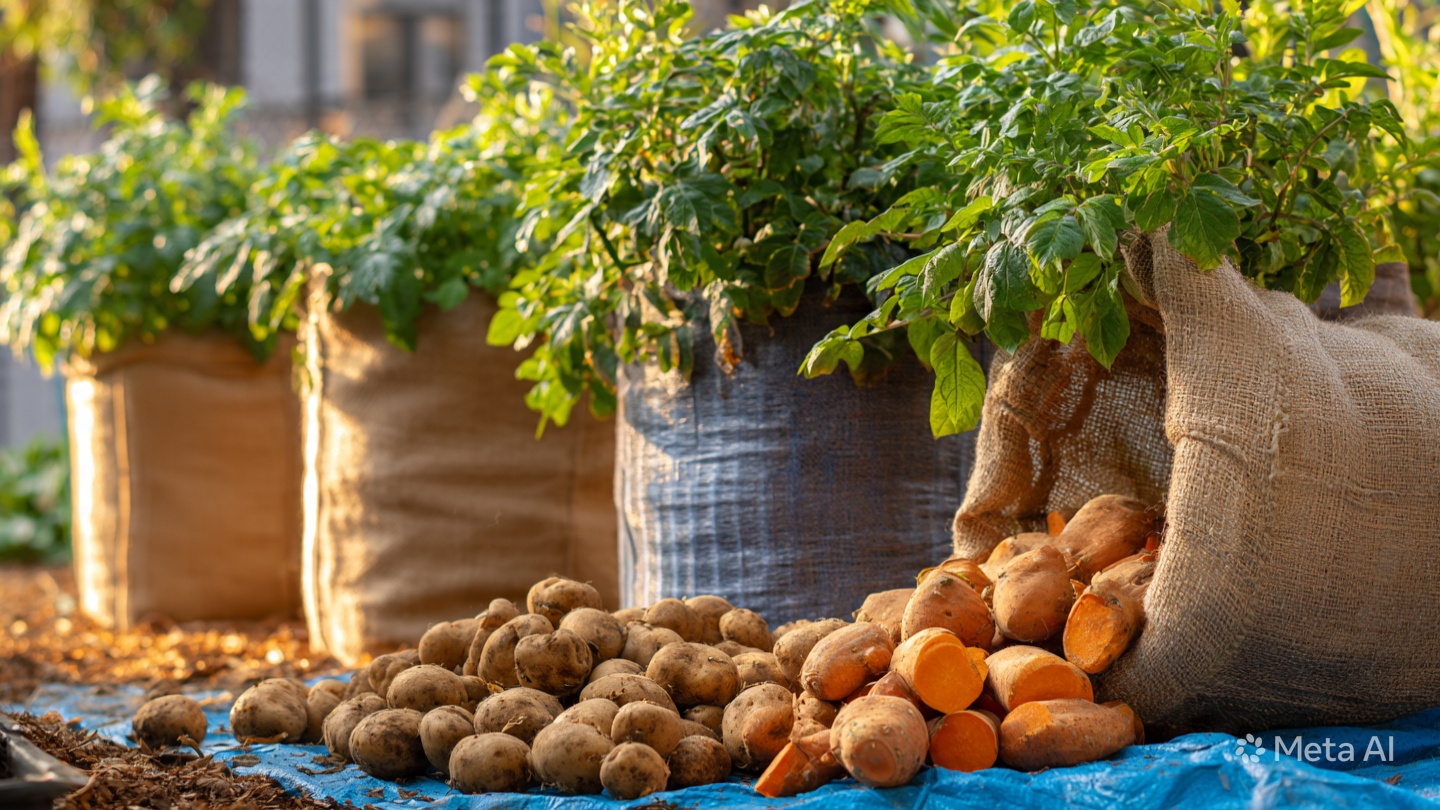
Why I Switched to Sack Bag Potato Farming
Let me be honest with you. When I first thought about growing Harrish potatoes and sweet potatoes, I assumed I needed acres of land. I was wrong. Very wrong.
You can start potato farming right from your tiny backyard, balcony, or even your apartment patio. How? The answer is sack bags.
I remember my first failed attempt. I planted regular potatoes directly into the ground, but my soil was rocky and hard. The potatoes grew small and weirdly shaped. That was when I discovered the magic of sack bag farming. Now, I regularly harvest up to 20 kilograms (44 pounds) of potatoes from a single bag. Yes, you read that correctly.
In this complete guide, I will walk you through everything I have learned about Harrish potato farming and sweet potato farming using sacks. Whether you are a complete beginner or someone who has tried gardening before, you will find value here. I will speak directly to you, share my mistakes, and give you the exact steps I follow.
Let us get our hands dirty.
Understanding the Two Types of Potatoes You Can Grow
Before you plant a single seed, you need to understand that regular potatoes and sweet potatoes are not the same. They behave differently, and if you treat sweet potatoes like regular potatoes, you will fail.
The Regular Potato (Often called Harrish potato or Irish potato)
This is the common white, red, or yellow potato you buy at the grocery store. Botanically, it is a tuber. It grows best in cool weather. I plant mine in early spring or early autumn. The magic trick for regular potatoes is something called “hilling” or “earthing up.” I will explain this in detail later.
The Sweet Potato
Sweet potatoes are completely different. They are roots, not tubers. They love heat. I plant them in the middle of summer when the sun is scorching. You cannot plant a sweet potato tuber directly like a regular potato. Instead, you need “slips,” which are small sprouts that grow from the tuber.
I will teach you how to make both methods work in sack bags.
Why Sack Bags? My Top 5 Reasons
You might be wondering, “Why should I use sacks instead of plastic pots or grow beds?” Let me give you my five reasons.
- They are cheap or free. I have used old rice sacks, feed bags, and even heavy-duty shopping bags. You do not need expensive containers.
- They provide excellent drainage. I simply punch holes in the bottom. Potatoes hate sitting in water. Sack bags naturally allow excess water to escape.
- They make hilling easy. With a regular pot, you cannot add soil easily. With a sack bag, I roll up the sides as the plant grows. This is perfect for earthing up.
- Harvesting is a joy. When harvest time comes, I do not dig. I just tip the entire bag over onto a tarp. All my potatoes are right there.
- They save space. I can place 10 bags in a 2-meter by 2-meter space. You truly do not need a farm.
I recommend using burlap sacks or thick polypropylene bags. Avoid thin garbage bags because they tear easily. Your sack should be at least 60 to 100 centimeters tall.
Materials You Will Need (My Complete List)
Before you start, gather these items. I keep all of these in my garden shed.
- Sack bags: 5 to 10 bags, depending on how many potatoes you want.
- Seed potatoes: For regular Harrish potatoes. Buy certified disease-free seed potatoes from a garden center. Do not use grocery store potatoes unless you have no other option.
- Sweet potato slips: You can buy these online or grow your own (I will show you how).
- Potting mix: A light, loose soil mix. Avoid heavy clay soil.
- Compost: Well-decomposed organic matter.
- Sand: For sweet potatoes specifically.
- Fertilizer: A balanced fertilizer (10-10-10) for regular potatoes. A low-nitrogen, high-phosphorus fertilizer for sweet potatoes.
- Watering can or hose with a gentle spray nozzle.
- A tarp or old bedsheet: For harvesting.
- Scissors or a knife: For making drainage holes.
Now that you have your materials, let me walk you through the step-by-step process for each potato type.
How I Grow Harrish (Regular) Potatoes in Sack Bags
This is my favorite method because it feels like magic. You plant a few small seed potatoes, and months later you pull out dozens.
Step 1: Preparing Your Seed Potatoes
Do not just throw a whole potato into the bag. Here is what I do.
If your seed potatoes are small (the size of a chicken egg), I plant them whole. If they are large, I cut them into pieces. Each piece must have at least two or three “eyes.” The eyes are the little dimples where sprouts emerge.
After cutting, I leave the pieces on a tray in my kitchen for 24 to 48 hours. This allows the cut surface to form a callus. A callus is a dry, tough layer that prevents rotting. I learned this lesson the hard way when I planted fresh cuts and they rotted in the soil.
Step 2: Preparing the Sack Bag
Take your empty sack. Using a knife or scissors, punch 10 to 15 small holes in the bottom. Also punch a few holes along the lower sides.
Now, here is a critical technique. Roll down the sides of the sack so it is only half its height. For example, if your sack is 80 cm tall, roll it down to 40 cm. This gives you room to add soil later.
Add a 10 cm layer of potting mix mixed with compost to the bottom of the rolled-down sack.
Step 3: Planting the Seed Potatoes
Place three to four seed potato pieces on top of the soil. Space them evenly. Do not overcrowd. I place mine about 15 cm apart.
Cover the seed potatoes with another 10 cm of soil. Water gently until the soil is moist but not soaking wet. I always say: “Damp like a wrung-out sponge, not like a flooded rice paddy.”
Place the sack in a location that receives at least six hours of direct sunlight every day.
Step 4: The Critical “Hilling” or “Earthing Up” Process
This is where most beginners fail. Listen carefully.
In about one to two weeks, you will see green shoots emerging from the soil. Let them grow. When the stems reach 20 to 25 cm tall (about the height of a ruler), you must hill them.
Hilling means adding more soil. I gently unroll the sack a little bit. Then I add a 10 cm layer of soil or compost around the stems. I bury the stems so only the top three to four leaves are showing.
Why do I do this? Because regular potatoes grow on the buried part of the stem. Every time you add soil, you are creating more space for potatoes to form. This is the secret to a huge harvest.
I repeat this process every time the stems grow another 20 cm. I keep adding soil until the sack is completely unrolled and full to the top. By the end, the plant looks like it is growing from a deep, full bag of soil.
Step 5: Watering and Feeding
Consistency is key. I water my potato sacks two to three times per week, depending on the weather. If the top two inches of soil feel dry, I water.
Once the plants start flowering, I give them a dose of balanced liquid fertilizer. This usually happens about six to eight weeks after planting.
I watch for pests. The biggest enemy is the potato beetle. I check under the leaves every morning and pick off any beetles by hand.
Step 6: Harvesting Your Harrish Potatoes
How do you know when to harvest? Watch the leaves. When the leaves turn yellow and begin to die back, your potatoes are ready.
Here is my trick. Stop watering completely for one to two weeks before harvest. This toughens the skins so the potatoes store longer.
To harvest, I lay a tarp on the ground. I tip the entire sack upside down onto the tarp. The soil falls out, and the potatoes are right on top. I simply pick them up. It is that easy.
Do not wash your potatoes. I brush off the dry soil and let them cure in a cool, dark place for two weeks. Curing means storing them at 10 to 15°C with high humidity. This heals small cuts and makes them last for months.
How I Grow Sweet Potatoes in Sack Bags (The Heat-Loving Method)
Sweet potatoes are different, but they are actually easier in some ways. They love heat, tolerate drought, and produce massive yields. Here is my exact process.
Step 1: Growing or Buying Sweet Potato Slips
You cannot plant a sweet potato tuber like a regular potato. It will just rot. Instead, you need slips. A slip is a sprout that grows from the tuber.
I will teach you how to make your own slips because it saves money.
Take a healthy, organic sweet potato from the store. Stick four toothpicks around its middle. Suspend the sweet potato over a glass of water so the bottom half is submerged and the top half is in the air. The toothpicks rest on the rim of the glass.
Place the glass on a sunny windowsill. Change the water every few days. In two to four weeks, you will see roots growing in the water and sprouts (slips) growing from the top of the potato.
When the slips are 15 to 20 cm tall, I gently twist them off the mother potato. Do not cut them. Twist.
Place the slips in a shallow glass of water. In a few days, they will grow their own roots. Now you are ready to plant.
Alternatively, you can buy slips online or from a garden center. This is easier for your first attempt.
Step 2: Preparing the Sack for Sweet Potatoes
Sweet potatoes need looser soil than regular potatoes. I mix two parts potting soil, one part compost, and one part coarse sand. The sand ensures excellent drainage and prevents the sweet potatoes from growing misshapen.
Fill your sack completely with this mix. Unlike regular potatoes, you do not roll down the sack for sweet potatoes. Fill it to the top from the beginning. Sweet potatoes do not need hilling.
Step 3: Planting the Slips
Dig a small hole in the center of the sack. Plant one slip, burying the stem up to the first set of leaves. In a standard sack, I plant two or three slips maximum. More than that, and the sweet potatoes will be small.
Water thoroughly after planting. The slips may look wilted for the first two to three days. Do not panic. This is normal. They are establishing roots.
Step 4: Caring for Sweet Potatoes
Place the sack in the hottest, sunniest part of your backyard. Sweet potatoes laugh at heat.
Water regularly for the first four weeks. After the plants are established, I water once or twice a week deeply. Sweet potatoes are drought-tolerant, but they produce better with consistent moisture.
Here is a mistake I made. I used too much nitrogen fertilizer. The leaves grew huge and lush, but when I harvested, the potatoes were tiny. Sweet potatoes need phosphorus and potassium. I now use a fertilizer with a ratio like 5-10-10. Look for “bloom booster” or “root crop” fertilizer.
Sweet potatoes vine outward aggressively. If you are tight on space, you can prune the vines. I cut back the vines when they start touching the ground. Pruning does not hurt the tuber production.
Step 5: Harvesting Sweet Potatoes
Sweet potatoes take longer than regular potatoes. I wait 16 to 20 weeks. The first sign of harvest readiness is the leaves turning yellow.
I harvest before the first frost. Frost will ruin sweet potatoes.
To harvest, I again tip the sack onto a tarp. Sweet potatoes grow deep, so you may need to sift through the soil. I wear gloves because the soil can be compacted.
Step 6: The Secret to Sweet, Long-Lasting Sweet Potatoes (Curing)
This step is mandatory. Do not skip it, or your sweet potatoes will taste like cardboard.
After harvest, do not eat them. Instead, cure them. Curing means storing them in a warm (25 to 30°C), humid (80 to 90 percent humidity) place for 10 to 14 days.
How do I create this environment? I place my sweet potatoes in a cardboard box lined with newspaper. I put the box in my warmest room, often near a heater but not touching it. I mist the inside of the box lightly with water every day.
During curing, the starches convert to sugars. The skins also thicken. After curing, I move them to a cool, dark place where they will last for six to eight months.
Side-by-Side Comparison Table
I have created this table so you can see the differences at a glance.
| Feature | Regular (Harrish) Potato | Sweet Potato |
|---|---|---|
| Planting material | Seed potato pieces with eyes | Slips (sprouts from a tuber) |
| Soil type | Standard potting mix + compost | Loose sandy mix (add sand) |
| Hilling required? | Yes (critical for yield) | No |
| Sunlight | 6+ hours | 8+ hours (loves heat) |
| Watering | Consistent, moderate | Moderate, drought-tolerant once established |
| Fertilizer | Balanced (10-10-10) | Low nitrogen, high phosphorus (5-10-10) |
| Time to harvest | 10 to 17 weeks | 16 to 20 weeks |
| Curing needed? | Yes (2 weeks cool & dark) | Yes (2 weeks warm & humid) |
| Best season | Spring or autumn | Summer |
Common Problems and My Solutions
Let me save you from the mistakes I made.
Problem: My regular potatoes are small.
- Solution: You did not hill enough. Every time you skip hilling, you lose potential potatoes. Also, you may have planted too many seed potatoes in one bag. Stick to three or four.
Problem: My sweet potato leaves are huge but no potatoes.
- Solution: Too much nitrogen and not enough phosphorus. Switch your fertilizer. Also, you may have harvested too early. Sweet potatoes need a long, hot season.
Problem: The bottom of my sack is rotting and smells bad.
- Solution: Poor drainage. You need more holes. You may also be overwatering. Let the top two inches of soil dry out before watering again.
Problem: Insects are eating my leaves.
- Solution: For regular potatoes, hand-pick beetles. For sweet potatoes, watch for weevils. Neem oil spray once a week works for both.
Problem: My potato sacks keep falling over.
- Solution: As the sack fills with soil, it becomes top-heavy. I place my sacks against a wall or fence. I also tie them loosely to a stake if needed.
My Monthly Maintenance Schedule
I follow this routine. You should too.
Week 1-2 after planting (Regular potatoes): Water gently. Watch for sprouts. No fertilizer yet.
Week 3-4 (Regular potatoes): First hilling when stems reach 20 cm. Add soil. Begin watering consistently.
Week 5-8 (Regular potatoes): Second and third hilling as needed. Apply balanced fertilizer when flowers appear.
Week 9-12 (Regular potatoes): Leaves begin yellowing. Stop watering. Prepare for harvest.
Week 1-4 (Sweet potatoes from slips): Water slips daily for first week, then reduce. No fertilizer yet.
Week 5-12 (Sweet potatoes): Water deeply once or twice weekly. Apply low-nitrogen fertilizer at week 6 and week 12. Prune vines if needed.
Week 13-16 (Sweet potatoes): Leaves begin yellowing. Stop watering one week before harvest.
Week 17-20 (Sweet potatoes): Harvest. Begin curing process immediately.
How to Store Your Harvest Like a Professional
You grew all these potatoes. Now keep them from rotting.
Storing regular Harrish potatoes:
- Do not wash them.
- Brush off loose soil.
- Cure for two weeks at 10 to 15°C and high humidity.
- After curing, store in a dark, cool place (4 to 7°C).
- Keep them away from onions. Onions make potatoes sprout faster.
- In good conditions, they last 5 to 8 months.
Storing sweet potatoes:
- Cure first (warm and humid for 10 to 14 days).
- After curing, store at 13 to 16°C.
- Do not refrigerate sweet potatoes. The cold ruins their texture and flavor.
- Wrapped in newspaper in a cardboard box, they last 6 months.
Frequently Asked Questions From My Readers
Q: Can I grow regular potatoes and sweet potatoes in the same sack?
A: No. I tried this. They have different water, soil, and temperature needs. Keep them separate.
Q: How many potatoes will one sack produce?
A: For regular potatoes, one sack with three seed potatoes gives me 2 to 3 kilograms. With perfect conditions, I have gotten 5 kilograms. For sweet potatoes, two slips in one sack give me 3 to 4 kilograms.
Q: Can I reuse the soil after harvesting?
A: I do not recommend it. Potatoes are heavy feeders. They also can leave behind diseases. I empty the sacks, clean them, and use fresh soil for the next season. The old soil goes into my compost pile.
Q: What is the best sack size?
A: I use sacks that hold 40 to 50 liters of soil. The height should be at least 60 cm for regular potatoes and 50 cm for sweet potatoes.
Q: Do I need to buy certified seed potatoes every year?
A: For regular potatoes, yes. Store-bought potatoes are often treated with sprout inhibitors. For sweet potatoes, you can regrow slips from your own harvest every year.
Conclusion: You Are Ready to Start Your Sack Bag Potato Farm
You have made it to the end. Now you know everything I know about Harrish potato farming and sweet potato farming in sack bags.
Let me summarize the most important lessons.
For regular potatoes, remember three words: seed, hill, harvest. Use certified seed potatoes. Hill repeatedly as the plant grows. Harvest only after leaves die back.
For sweet potatoes, remember three different words: slips, sand, cure. Grow or buy slips. Use sandy, loose soil. Cure your harvest for sweetness.
Do not be afraid to start small. My first year, I used only two sacks. Now I use twenty. Every season, I learn something new. You will too.
Gather your sacks this weekend. Buy your seed potatoes or start your slips in a glass of water. Place your bags in the sunniest corner of your backyard. Water them consistently. Watch them grow.
There is a deep satisfaction in cooking a meal with potatoes you grew yourself from a simple sack bag. You are not just growing food. You are growing confidence, self-reliance, and connection to the earth.
Now go ahead. Get your hands in the soil. Your potato harvest is waiting.
Have you tried growing potatoes in sacks before? Drop a comment below with your biggest challenge or your best harvest story. I read every comment and I am happy to help you troubleshoot.
If you found this guide useful, share it with a friend who has a small backyard but big dreams of growing their own food.
Happy growing, friend.
